PHILIPPINES E-INVOICING
BIR Electronic Invoicing System (EIS) Guide
A simple guide to BIR E-Invoicing—what it is, who needs to comply, how to get certified, and how it all works.
December 31, 2026 is the compliance deadline for the first group of covered taxpayers under RR No. 26-2025. Now's the time to prepare your business for electronic invoicing.
Note: Requirements and deadlines may vary by taxpayer classification. Verify current BIR regulations and technical guidelines before implementation.
BIR E-INVOICING:
What you need to know
What Is BIR EIS?
A BIR system for receiving electronic invoice and sales data.
Compliance Deadline
December 31, 2026, for the first group of covered taxpayers.
Who Must Comply?
Certain online sellers, large taxpayers, and covered system users.
Data Transmission
Required sales data is generally transmitted within 3 calendar days.
Required Format
Structured JSON data with prescribed security requirements.
EIS Certification
Complete registration, testing, and applicable approvals.
INTRODUCTION
What is BIR EIS?
The Electronic Invoicing System (EIS) is a platform developed by the Bureau of Internal Revenue (BIR) that allows covered businesses to electronically transmit invoice and sales data directly from their existing systems.
Unlike traditional invoicing, where businesses simply print or email invoices to customers, EIS requires covered taxpayers to submit structured, digitally signed invoice data to the BIR electronically.
Introduced under the TRAIN Law (Section 237-A of the National Internal Revenue Code), EIS supports the government's move toward digital tax reporting and compliance.
The Ease of Paying Taxes (EOPT) Act further simplified invoicing requirements by establishing the invoice as the primary document for both goods and services.
E-invoicing is more than going paperless. It's about having a business system that can generate, organize, and securely transmit invoice data according to BIR requirements.
COVERAGE
Who needs to comply?
BIR E-Invoicing compliance will be implemented in phases. The first four taxpayer groups must comply by the prescribed deadline, while the remaining groups will follow separate BIR regulations as the necessary infrastructure becomes available.
Required by December 31, 2026
MANDATORY- Taxpayers engaged in e-commerce or internet transactions (small, medium, and large).
- Taxpayers registered under the Large Taxpayers Service (LTS).
- Large taxpayers classified under RA 11976 and RR No. 8-2024.
- Taxpayers using a Computerized Accounting System (CAS), Computerized Books of Accounts (CBA) with e-invoicing, or other invoicing software.
Covered in a Later Phase
DATE TBA- Exporters of goods and services.
- Registered business enterprises enjoying tax incentives.
- Taxpayers using Point-of-Sale (POS) systems.
- Other taxpayers designated by the Commissioner.
If the head office or any branch falls into a covered group, every location of that taxpayer must issue electronic invoices.
Micro taxpayers engaged in e-commerce or internet transactions are exempt from the December 31, 2026 mandate. They may still adopt EIS voluntarily.
EIS ELIGIBILITY CHECK
Check if your business is covered
Select the statements that describe your business. Your initial assessment will appear automatically below.
Select one or more statements above to see which compliance category may apply to your business.
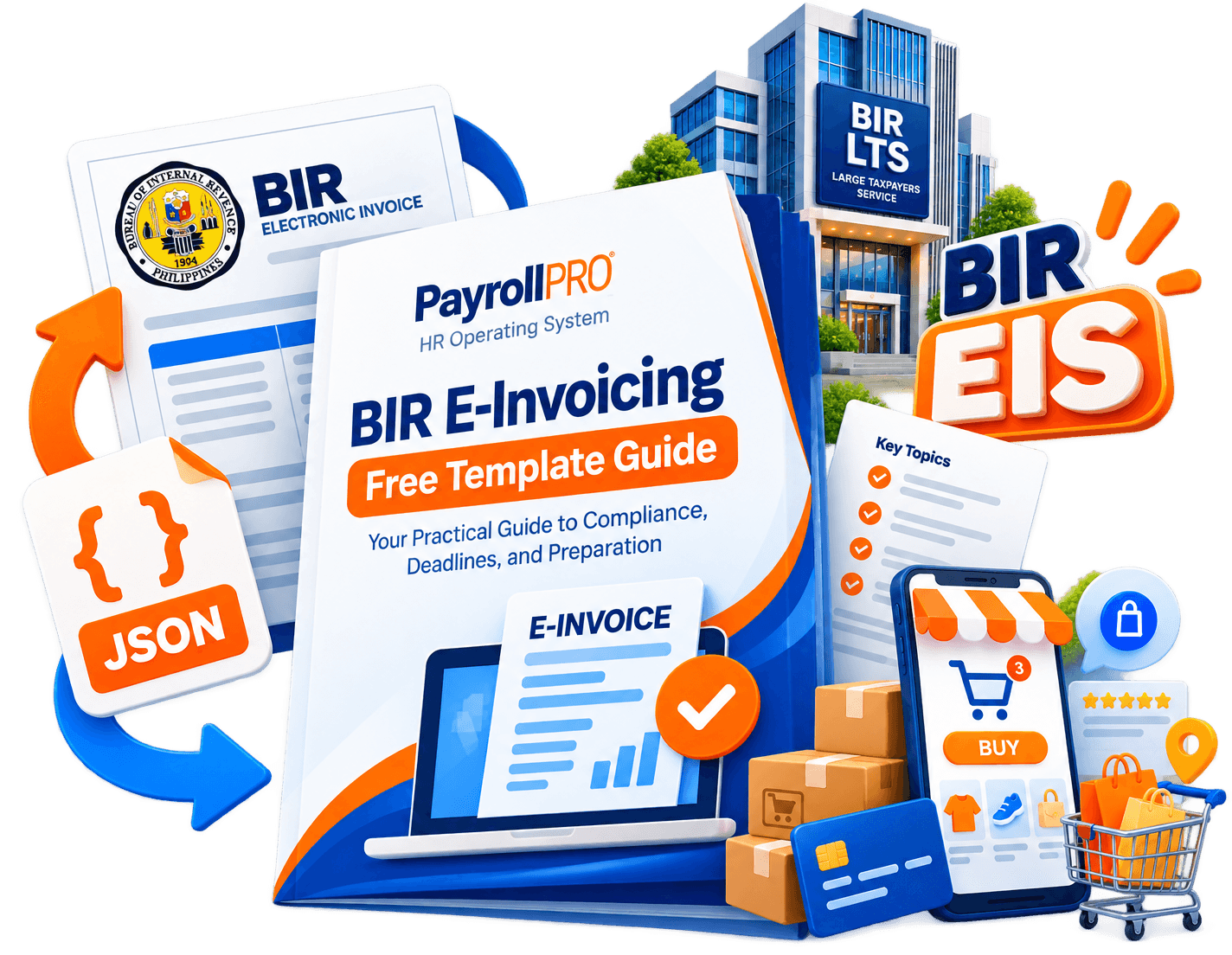
FREE DOWNLOAD
Get Your Complete
BIR e-Invoicing Guide
Save time and get the key information you need.
Your practical guide to compliance, deadlines and registration.
What's Inside the Guide?
1. Legal Basis of EIS
2. Timeline and Key Dates
3. How to Register for EIS
4. How the EIS API Works
5. API Documentation and Test Tools
FREQUENTLY ASK QUESTIONS
Common Questions About BIR EIS
EIS stands for Electronic Invoicing System. It is a BIR platform designed to receive electronic invoice and sales data from covered taxpayers.
Coverage depends on the taxpayer categories identified in applicable BIR regulations. Businesses should verify their classification and the latest official requirements.
Not automatically. Covered taxpayers must meet the applicable structured data and electronic transmission requirements
Technical requirements depend on the applicable EIS implementation method. Review the official BIR documentation with your software provider.
Start by confirming your taxpayer coverage, reviewing your invoicing process, checking system capabilities, and planning the required registration and testing.
STAY INFORMED
Stay Updated with PayrollPRO
Get HR, payroll, and BIR compliance updates, helpful guides, and practical business tips
delivered straight to your inbox.